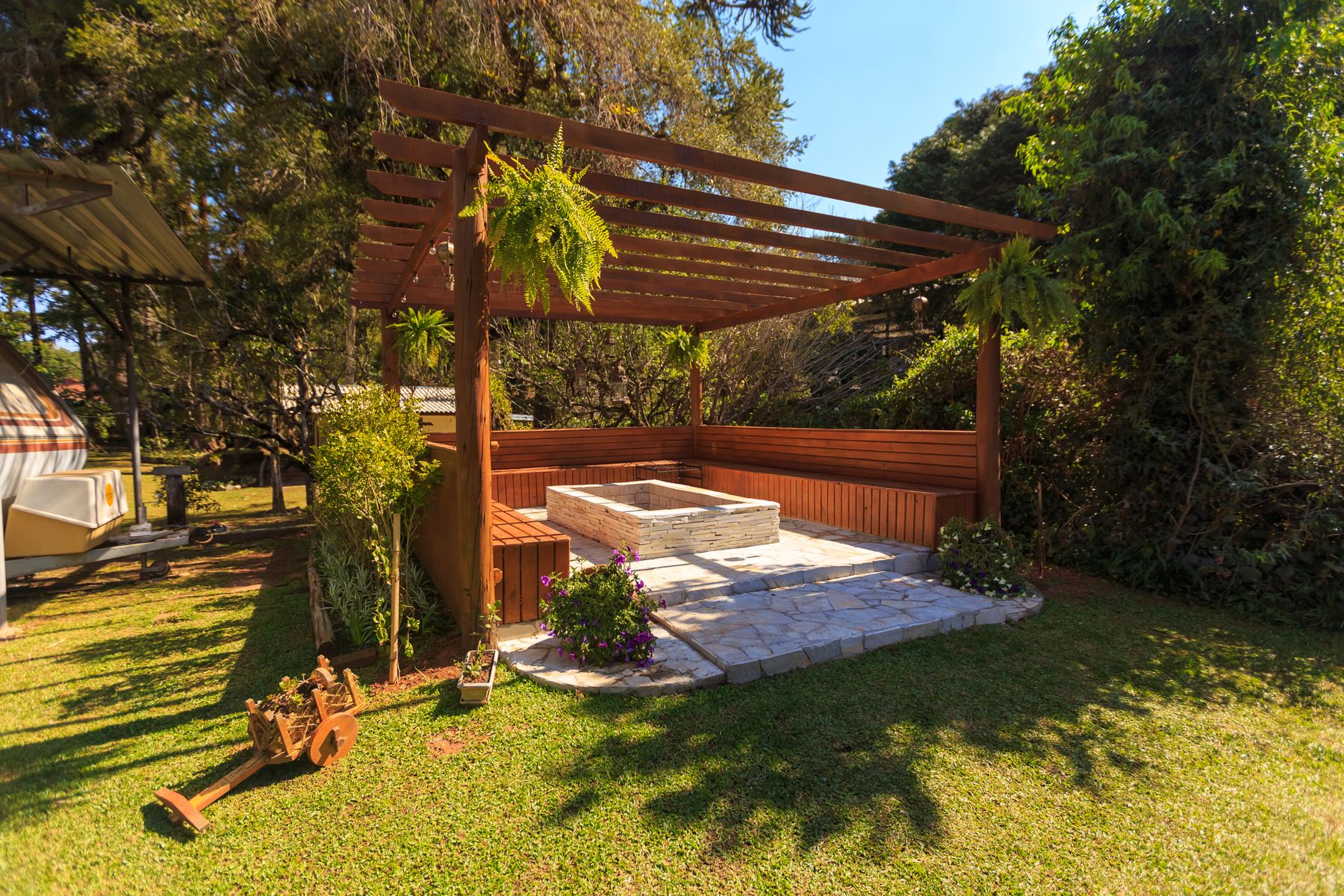
The two structures most homeowners confuse are the pergola and the pavilion. They both sit in the backyard. They both provide shade. They both look like they belong in the same trade magazine. And they solve different parts of the same problem. A pergola is an open-lattice structure with slatted or beamed rafters that filter sun and accept climbing plants. A pavilion is a solid-roofed structure with full shade and full rain protection — basically an outdoor room without walls. Choosing between them comes down to one question: do you want filtered sun or solid shelter?
Definitions and what they actually do
Pergolas originated in Renaissance Italy as a way to extend the house into the garden with a structure that admitted light and air. The defining features are still there: vertical posts, horizontal beams, and an open roof of rafters or slats. Modern pergolas add options — motorized louvers, retractable canopies, drop-down screens — but the silhouette is unchanged. You get partial shade (60 to 80 percent sun blockage depending on slat spacing) and partial rain protection (a heavy downpour still gets through). What you trade away in coverage you gain in light, openness, and the ability to grow vines.
Pavilions are the heavier cousins. They have a solid roof — usually shingles, standing-seam metal, or a polycarbonate panel system — supported by posts or walls. The roof is fully weather-tight, the shade is complete, and the structure reads as an extension of the house. A pavilion can be freestanding (a hexagonal or rectangular garden structure) or attached (a covered patio off the back of the house). It is the right answer if you want to host dinner in a thunderstorm.
For most patios in mixed climates, the pavilion gives you more usable hours per year. For gardens where the goal is ambiance, plant support, and filtered light, the pergola is more graceful.
Cost ranges and where the money goes
Prices vary widely by region, material, and whether you DIY. These are realistic installed costs for a 12×16-foot structure in 2026:
Pergola:
- Cedar kit (like the Cedar Pergola Kit from Backyard Discovery at Home Depot): $1,200 to $2,500 for materials, $1,500 to $3,500 installed
- Vinyl pergola kit (New England Arbors or Heartland): $2,000 to $4,500 installed
- Aluminum pergola kit (StruXure or Equinox louvered): $6,000 to $14,000 for materials, $10,000 to $20,000 installed
- Custom cedar with a contractor: $4,000 to $9,000 installed
- Custom cedar with stone columns and motorized retractable canopy: $15,000 to $40,000
Pavilion:
- Soft-top pavilion kit (a fabric-roofed garden pavilion from Yardistry): $1,800 to $3,500
- Wood pavilion kit with asphalt-shingle roof: $3,500 to $7,500 installed
- Vinyl pavilion kit (Weatherwood by Vinyl Industries): $6,000 to $11,000 installed
- Custom timber-frame pavilion from a regional fabricator: $10,000 to $30,000
- Masonry or attached pavilion: $25,000 to $75,000+
The cost gap is real. A pavilion typically runs 30 to 60 percent more than a comparable pergola because the roof system, the load requirements, and often the foundation are heavier. A 12×16-foot pavilion needs 6-inch-deep concrete footings under each post; a pergola of the same size can often sit on surface-mount brackets or pre-cast pier blocks.
Materials and their behavior over time
Cedar is the classic. A clear Western Red Cedar pergola weathers to a silver-gray patina within 18 to 24 months if left unfinished. Apply a penetrating oil stain (TWP 1500 Series or Penofin) every 2 to 3 years and the wood keeps its reddish-brown tone indefinitely. Cedar is dimensionally stable, naturally rot-resistant, and insect-resistant without chemical treatment. The main weakness is cupping on wide boards — common in beams wider than 8 inches.
Pressure-treated southern yellow pine is the more budget-friendly choice. It is about 30 percent cheaper than cedar and lasts 20+ years. The downside is appearance: it has a greenish tint at first and a tendency to check (small surface cracks) as it seasons. Modern formulations (Micronized Copper Azole, or MCA) are safer than the older CCA-treated lumber but should not be used near vegetable gardens.
Aluminum is the low-maintenance upgrade. StruXure, Equinox, and Azenco make motorized pergolas with extruded aluminum frames and adjustable louvers. Prices are higher ($10,000 to $20,000 installed for a 12×16), but you get a powder-coated finish that lasts 15+ years without refinishing, and the louvers rotate to control sun and rain with a remote or app. In coastal areas, aluminum beats wood because it does not absorb salt air and does not host mold.
Vinyl is the maintenance-free choice. New England Arbors and Weatherwood make kits that look like painted wood without the painting. The trade is rigidity — vinyl will not take a hit from a falling branch the way cedar will, and it can sag in extreme heat if the kit is poorly engineered. Vinyl is also difficult to modify on site; you measure twice and order once.
Steel appears in the high end of the market. Modern steel pergolas (the Lumenshade from Structureworks, the StruXure steel line) combine painted steel frames with timber or aluminum infill. They are the strongest option for hurricane zones but require professional installation and cost $25,000 to $50,000 installed.
Footprint, height, and how it sits in the yard
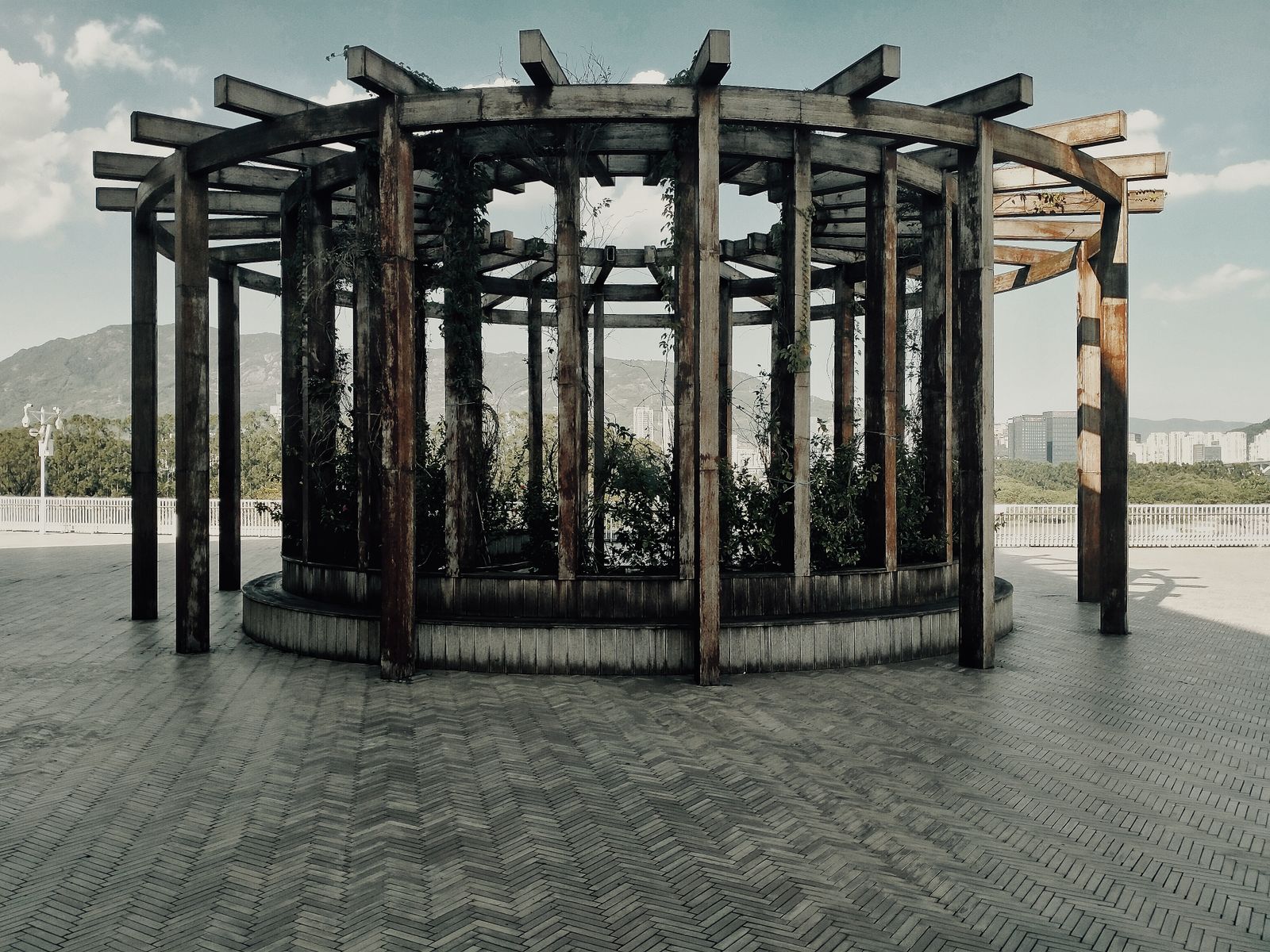
A pergola reads lighter than a pavilion in the landscape. The slatted roof lets the sky through, so a 12-foot-tall pergola does not visually overpower a one-story home. A pavilion with a solid roof at the same height looks bulky unless you scale it up.
Standard dimensions:
- Post height: 8 to 10 feet (shorter feels cramped, taller feels airy)
- Beam span: 10 to 16 feet between posts (longer spans need engineered beams)
- Roof pitch: 1/4 inch of rise per foot of run for a flat-looking pavilion; 6/12 or steeper for a traditional peaked roof
For a 12×16-foot structure, you need a minimum of 240 square feet of clear, level ground. Add 18 to 24 inches of working clearance around each side if you are assembling the kit yourself, and 36 inches for a contractor bringing in equipment.
Pergolas tolerate slope better than pavilions because the open roof does not have to shed water along a precise plane. You can step a cedar pergola down a slope by adjusting post lengths without sacrificing function. A pavilion roof on a slope requires careful framing and is usually a job for a carpenter.
Permits, setbacks, and the rules you have to check
Anything larger than 100 square feet usually requires a permit in most U.S. jurisdictions. A pergola or pavilion attached to the house almost always does; a freestanding structure under 120 square feet sometimes does not.
The key rules to verify:
- Setbacks. Most cities require 5 to 10 feet from a property line. Some HOAs are stricter (10 to 20 feet).
- Height limits. Residential accessory structures are usually capped at 12 to 15 feet.
- Footings. Frost-line footings (typically 36 inches deep in cold climates) are required for permanent structures.
- HOA approval. Many HOAs require architectural review for any visible structure. Submit plans before buying materials.
- Utility easements. Building over a buried utility line is a problem you do not want.
A permit costs $100 to $400 depending on the jurisdiction. A site plan (drawn to scale, showing the structure footprint relative to the house and property lines) is usually required. If you hire a contractor, they handle permitting. If you DIY, you handle it yourself.
When to pick a pergola
- You want filtered sun, not full shade, over a deck or patio
- You plan to grow wisteria, grape, or climbing roses up the posts and across the beams
- Your home's architecture is light — coastal, modern farmhouse, mid-century — and a heavy roof would look wrong
- You want to define an outdoor "room" without enclosing it
- You have a smaller budget and an appetite for DIY (most kits are two-day projects for two people)
- You do not have a defined outdoor dining or cooking zone to shelter
When to pick a pavilion
- You want to use the patio in rain, snow, and direct overhead sun
- You have a hot tub, outdoor kitchen, or dining area that needs solid weather protection
- You want to mount a ceiling fan, infrared heaters, or recessed lighting and need a true ceiling to do it
- Your home is large and traditional enough that an open pergola would feel undersized
- You are in USDA zones 3 to 5 and want snow-load-rated roofing (a properly engineered pavilion handles 30 to 50 psf snow load; a pergola does not)
A practical decision flow
Here is how the decision typically shakes out:
Budget under $3,000 installed? Buy a 10×10 or 12×12 cedar or vinyl pergola kit. Home Depot, Lowe's, and Costco sell Backyard Discovery, Yardistry, and Toja Grid kits that go up in a weekend.
Budget $3,000 to $8,000? Either a larger cedar pergola with a contractor install or a soft-top pavilion kit. The Yardistry 12×14 gazebo and the Sunjoy 12×10 hardtop gazebo are the popular soft-top picks at this price.
Budget $8,000 to $20,000? Either a high-end motorized louvered pergola (StruXure, Equinox) or a custom timber-frame pavilion. At this price the structure becomes a defining feature of the property.
Budget above $20,000? Custom design with a landscape architect or a specialty fabricator. The choice between pergola and pavilion is mostly aesthetic at this tier.
The bottom line
Choose a pergola when you want filtered light and the option to grow vines across an open frame; choose a pavilion when you need solid shelter for cooking, dining, or hot tub use in any weather. For most patios in mixed climates, a 12×16-foot cedar pergola kit in the $1,500 to $3,500 range covers the common case without overspending on roof structure you do not need.