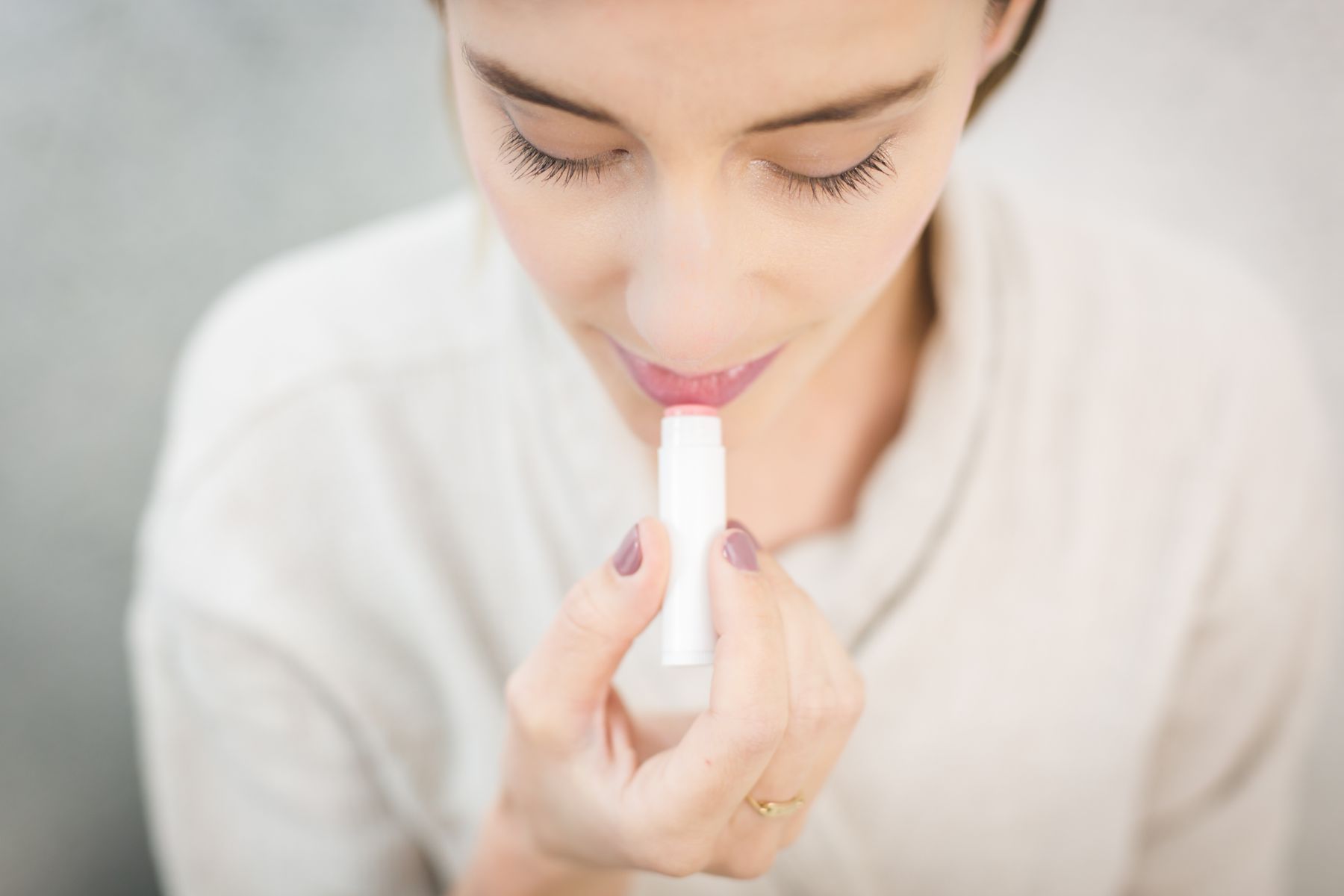
Lips are an afterthought in most routines. They get whatever balm is in the bag, applied whenever they feel dry. We approached the category the same way we approached every other category in this series: by mapping the actual biology, testing the products, and stripping out what does not work.
The result is a routine that takes two minutes morning and night, uses four to six products, and produces measurably smoother, more hydrated, healthier lips within three to four weeks.
Why lips get dry, chapped, and crepey
The skin on the lips is structurally different from the skin on the rest of the face. It is much thinner (about three cell layers versus sixteen), has no sebaceous glands, no sweat glands, and no hair follicles. It cannot produce its own oils, cannot moisturize itself from within, and has no protective barrier against environmental damage.
This is why lips dry out faster than the skin around them. It is also why lip skin ages faster — sun exposure hits the lips directly, and the thin structure means UV damage shows up earlier and deeper than on the cheeks.
The most common lip problems fall into four categories: dehydration (lips feel tight, look dull, often from weather or product stripping), chapping (visible peeling, sometimes from habitual licking), pigmentation (darker tone, sometimes from smoking or sun), and texture lines (vertical creases from collagen loss, often around age 40). Each responds to a different set of ingredients.
Exfoliation: when and how
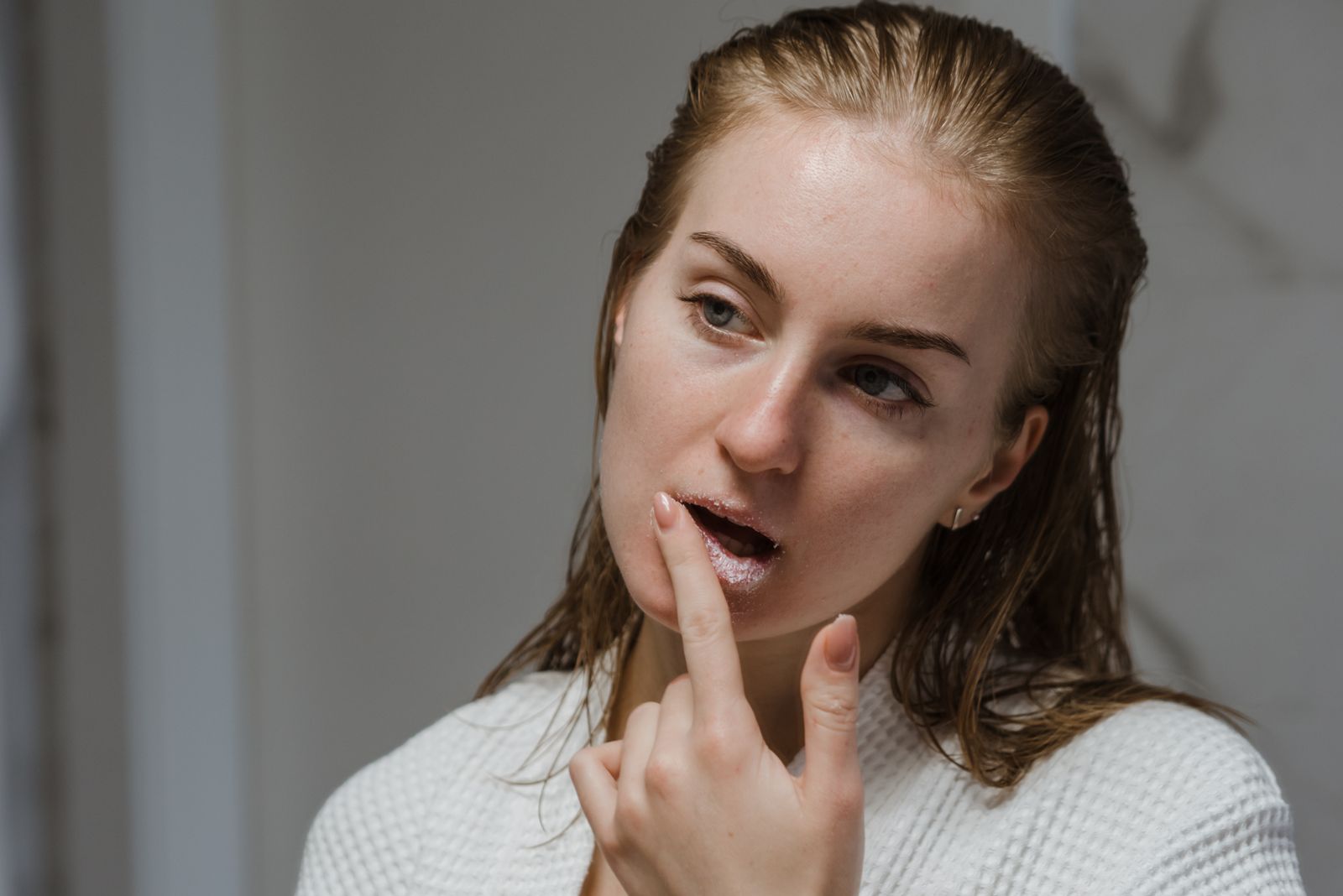
Lip exfoliation gets a bad reputation because it is overdone. The lips do benefit from gentle exfoliation — the cell turnover on the lip surface is slower than on the face, and buildup of dead cells makes the lips look dull and feel rough. But aggressive scrubbing damages the thin skin and produces more peeling.
Frequency: once or twice a week is enough for most people. Daily exfoliation is too much. Exfoliation belongs in the evening routine, after cleansing the face, before applying lip treatment products.
Mechanical exfoliants: sugar scrubs with fine grain. The $16 Sara Happ Pink Sugar Scrub uses jojoba oil and finely milled sugar — gentle enough for weekly use. The $8 e.l.f. Lip Exfoliator uses sugar in a similar base. The $4 Lush Sugar Scrub (Popcorn) is a budget pick.
DIY option: a pinch of sugar mixed with a few drops of olive oil or honey. Cheap, effective, but harder to control the grain size.
Chemical exfoliants: lip-specific products with lactic acid or PHA. The $16 Versed Weekend Glow is marketed as a lip exfoliant and contains lactic acid. For sensitive lips, these are gentler than scrubs because they dissolve dead cells rather than rubbing them off.
Technique: apply a small amount (less than you think), use a damp finger or soft toothbrush to move it across the lips in small circles for thirty seconds, rinse with lukewarm water, pat dry. Do not use a washcloth — too abrasive. Do not scrub hard — the lips are not the heels.
After exfoliation: apply a hydrating product immediately while the lips are still slightly damp. This is when hyaluronic acid and glycerin absorb most effectively.
Hydration: the day and night products
Lips need different products for day and night, just like the face. Daytime priorities are hydration with sun protection. Nighttime priorities are deep repair and occlusion.
Daytime hydration: lightweight balms with SPF and hydrating ingredients. The $4 Burt's Bees Beeswax Lip Balm is a classic, but lacks SPF. The $4 Sun Bum Mineral SPF 30 Lip Balm provides broad-spectrum sun protection without a heavy feel. The $10 Glossier Balm Dotcom is a clean, fragrance-free hydrator without SPF — layer sunscreen over it.
The most useful daytime ingredients: hyaluronic acid (hydrates and holds water), squalane (lightweight emollient), shea butter (richer hydration), ceramides (barrier support), beeswax (occlusion). Petrolatum is the most effective occlusive but feels heavy; reserve it for the night.
Nighttime hydration: thicker balms and treatment products. The $30 Laneige Lip Sleeping Mask uses a blend of shea butter, murumuru seed butter, and a soft hyaluronic acid. The $42 Summer Fridays Jet Lag Mask is similar in texture, also effective. Both work; the Laneige is slightly more occlusive, the Summer Fridays slightly lighter.
For dry, chapped, or peeling lips: a heavier occlusive at night. The $6 CeraVe Healing Ointment is petrolatum-based with ceramides and hyaluronic acid. The $5 Aquaphor Healing Ointment is a clean petrolatum-only option. Either one applied as a thick layer at night repairs most chapping within three to five nights.
Layering logic for the lips: hydration first (a thin hyaluronic acid or glycerin serum if you want to use one), then a thicker balm or mask on top to seal it in. The sealant is what prevents transepidermal water loss overnight.
SPF: the most overlooked step
Lip skin has no melanin and no sebum. It is one of the most UV-vulnerable areas of the body. Studies from the Skin Cancer Foundation show that around 9% of all skin cancers occur on the lips, and most lip cancers are on the lower lip because of the angle of sun exposure.
The skin around the lips ages at the same rate as the rest of the face, but the lip itself ages faster because sunscreen is rarely applied there. Most people apply face sunscreen up to the lip line and stop. The lips themselves get nothing.
The fix is straightforward: apply SPF lip balm every morning, reapplied every two hours when outdoors. The product can be the same as face sunscreen if it is comfortable on the lips, but most face sunscreens taste unpleasant and are not formulated for ingestion. Lip-specific SPF products are a better choice.
The picks we tested:
Budget: Sun Bum Mineral SPF 30 Lip Balm ($4), Burt's Bees Lip Balm with Sunscreen ($4), Baby Bum Mineral Lip Balm SPF 50 ($5).
Mid-tier: Sun Bum SPF 30 Sunscreen Lip Balm ($7), Supergoop Play Lip Balm SPF 30 ($10), Coola Liplux SPF 30 ($10).
Higher-end: Drunk Elephant Lip Balm SPF 30 ($20), La Roche-Posay Anthelios Lip Stick SPF 50 ($15).
For everyday use, a $5 SPF 30 lip balm reapplied every two hours is more useful than an expensive product applied once a day. Sun exposure is cumulative, and reapplication matters more than the percentage.
Tinted SPF lip balms — Supergoop Glowscreen Lip, $16, or Tower 28 SunnyDays SPF 30 Tinted, $14 — combine sun protection with a wash of color. For people who skip lipstick on no-makeup days, these are a clean two-in-one.
Lip masks and treatments
Lip masks fall into three categories, with different jobs.
Hydrating masks: sheet masks for the lips or thicker cream masks. The $4 Laneige Water Sleeping Mask in mini size is a hydrating mask, not a lip product, but works well on the lips when applied thickly. The $24 patch-style lip masks from brands like Patchology use hyaluronic acid and collagen to deliver a hydration burst. Most are not worth the price; a thick layer of plain occlusive at night works similarly.
Treatment masks: overnight masks with active ingredients. The $30 Laneige Lip Sleeping Mask is the most popular, with shea butter and a humectant blend. The $42 Summer Fridays Jet Lag Mask uses similar ingredients with a slightly lighter texture. The $60 Drunk Elephant Lippe ($26, depending on size) combines peptides, hyaluronic acid, and a soft balm texture.
Most lip masks are essentially thick balms with marketing. The exception is overnight repair masks that combine petrolatum with ceramides and a humectant — these are useful for chapped lips but not necessary for healthy lips.
What works: a thick layer of $6 CeraVe Healing Ointment at night produces the same result as most $30 masks. The difference is texture and fragrance, not performance.
Active ingredients for lip concerns
For specific lip issues, active ingredients matter more than the product category.
For pigmentation (darker lip tone): alpha arbutin, kojic acid, vitamin C, and licorice root extract. The $42 The Ordinary Ascorbic Acid 8% + Alpha Arbutin can be applied to the lips at night, avoiding the wet lip line. Sunscreen in the day prevents the pigmentation from returning.
For texture lines (around age 40): retinol and peptides. The $30 RoC Retinol Correxion Sensitive Lip Cream is one of the few lip-specific retinol products. The Ordinary 0.2% retinol in squalane can be applied around the lip line at night, avoiding the lips themselves. SPF is non-negotiable during the day.
For habitual licking or peeling: barrier repair with ceramides. The CeraVe Healing Ointment at night reduces the cycle of licking and peeling within a week. Habitual licking is the most common cause of chronic chapping, and the fix is the barrier repair plus breaking the habit.
For cold sores: prescription antivirals (acyclovir, valacyclovir) are the only effective treatment. Over-the-counter lysine and lemon balm show weak evidence. SPF lip balm prevents UV-triggered outbreaks.
A complete routine
Morning: SPF lip balm. Optional: a tinted SPF lip balm if you want color.
Midday (if outdoors): reapply SPF lip balm every two hours. Drink water — dehydration shows up on the lips within hours.
Evening: cleanse face and lips, exfoliate once or twice a week (Monday and Thursday, for example), apply a hydrating treatment if needed (a thin layer of hyaluronic acid serum works), seal with a thick balm or mask.
Weekly: gentle exfoliation. Lip mask or heavy occlusive on the weekend when the lips need extra repair.
The total cost of a working routine: under $30. A $5 SPF lip balm, a $5 gentle exfoliant, a $10 hydrating serum, and a $6 healing ointment cover the four jobs. Step up selectively if a specific concern needs a targeted ingredient.
Mistakes that undo the routine
Licking the lips. Saliva contains digestive enzymes that break down the lip barrier faster than the air dries them out. The cycle is: lips dry, you lick, saliva evaporates and removes more moisture, lips dry more. Breaking the cycle requires a barrier product within reach at all times — a $4 stick in every bag, on every desk.
Using lip products that dry out the lips. Many long-wearing lipsticks and matte liquid lipsticks contain ingredients (like isododecane) that pull moisture out of the lips. The $11 Maybelline SuperStay Matte Ink lasts 14 hours but requires a hydrating balm underneath and on top. Apply the balm 10 minutes before the lipstick, blot, then apply lipstick. Reapply balm on top once the lipstick sets.
Skipping SPF. The single most common lip-aging mistake. Lips that look crepey by 40 are usually lips that never had sun protection.
Skipping nighttime repair. Lips regenerate overnight, like the rest of the skin. A thick occlusive at night does most of the work that produces visible improvement.
The bottom line
Lip care needs four products: an SPF balm for daytime, a gentle exfoliant used weekly, a hydrating treatment for evening, and a thick occlusive to seal it in overnight. The total cost is under $30, the routine takes two minutes morning and night, and the results show within a month. Skip the licking, skip the matte liquid lipsticks without a balm underneath, and reapply SPF every two hours when outdoors.