
A kitchen is supposed to be the most-used room in the house. The average home cook spends more time in the kitchen than in any other shared space, yet kitchens are also the room with the most chaotic storage. Mismatched Tupperware, duplicate spatulas, and a drawer that everyone is afraid to open. The fix is not a magic product. It is a system that matches how you cook, paired with organizers that earn their place.
Here is the sequence we use when we organize a kitchen from top to bottom: map the zones, plan the storage by frequency of use, install the right organizers, and build a maintenance habit so the system survives the year.
Map the Four Kitchen Zones First
Draw your kitchen in plan view, including the sink, range, refrigerator, and any pantry. Now mark the four zones:
- Prep zone (counter next to the fridge and sink)
- Cook zone (counter and storage around the range)
- Clean zone (counter and storage next to the sink and dishwasher)
- Store zone (pantry, fridge, dry goods, anything cold)
Every drawer, cabinet, and shelf should be assigned to one of these four zones. Spoons go in the cook zone, mixing bowls go in the prep zone, sponges go in the clean zone. Crossing zones is what creates the "stuff everywhere" feeling.
Once you have zoned, store by frequency. Daily-use tools go in the most accessible drawer (top drawer on the cooking side). Weekly-use gadgets go in the second drawer or the back of a deep cabinet. Specialty gear (turkey pan, springform pan, ice cream maker) lives on a high shelf or in the basement. If you have to climb on a chair to retrieve it, you bought the wrong size of pan.
Drawer Dividers That Actually Hold Up
Most bamboo drawer dividers from big-box stores crack within a year. The two systems we trust are SimpleHouseware's expandable bamboo dividers ($22 to $39 per pair, sold as 4-, 6-, or 8-compartment sets) and Joseph Joseph's DrawerStore knife and cutlery trays ($32 to $48).
For cutlery, a Joseph Joseph DrawerStore holds up to 9 slots of knives, peelers, and shears, angled at about 25 degrees so the handles face you when the drawer opens. It is dishwasher safe and fits standard 18- to 24-inch drawers.
For utensils, we pair a SimpleHouseware 8-compartment divider with a small Joseph Joseph $19 tool holder on the right side for things that are awkward to lay flat - whisks, tongs, ladles. The combined kit runs about $50 and is faster than any custom drawer insert.
Peg-style dividers (you have seen the YouTube videos) work if you have a Rev-A-Shelf or Blum pull-out frame already. A 21-inch Rev-A-Shelf two-tier drawer insert runs $94 to $128 and converts a 24-inch base cabinet into two sliding drawers. Installation takes 30 to 45 minutes with a drill, four screws, and a level.
Cabinet and Shelf Organizers for Base Cabinets
Base cabinets are where the lost cause usually lives. Without inserts, the back half of every cabinet becomes dead space. A few upgrades change that.
Pull-out shelves. Rev-A-Shelf's 5PSP series (single-tier pull-out, 14 to 20 inches deep, $45 to $110 each) replaces the fixed shelf with a full-extension drawer. Load heavy items like cast iron and stand mixers at the bottom of the pull-out so you can slide them out instead of lifting them over the door frame.
Lazy Susans. For corner cabinets, a Rev-A-Shelf 32-inch polymer two-tier lazy susan ($134 to $189) makes the back corner reachable. Two tiers hold small appliances in front and dry goods in back. For wall corner cabinets, a 16-inch pie-cut lazy susan from the same brand runs $24 to $38.
Door-mounted racks. The inside of a cabinet door is wasted space on most kitchens. A SimpleHouseware over-the-door rack ($14 to $22) holds pot lids, cutting boards, or cleaning sprays. mDesign makes a 5-tier adjustable door rack ($18 to $26) for spices or cleaning bottles.
For upper cabinets, two things matter most: shelf risers to double the vertical space and a 32-ounce dispenser tray at the back for oils and vinegars. You can find both at Container Store. A mDesign wire shelf riser adds about $12 of usable vertical space per cabinet, and a 5-pack of risers runs around $35.
Pantry Systems: Tiered Shelves, Pull-Outs, and Bins
A pantry with one shelf height is the most common storage mistake in kitchens. Single-height shelves waste 60 percent of the cubic footage above whatever stack you just put down.
For walk-in and reach-in pantries, the mDesign adjustable tiered shelf system ($26 to $48 per unit) sits on a single shelf and adds two usable levels. A typical reach-in 12-inch-deep pantry fits a 3-tier and a 4-tier side by side, which brings the count from roughly 12 item placements to 40.
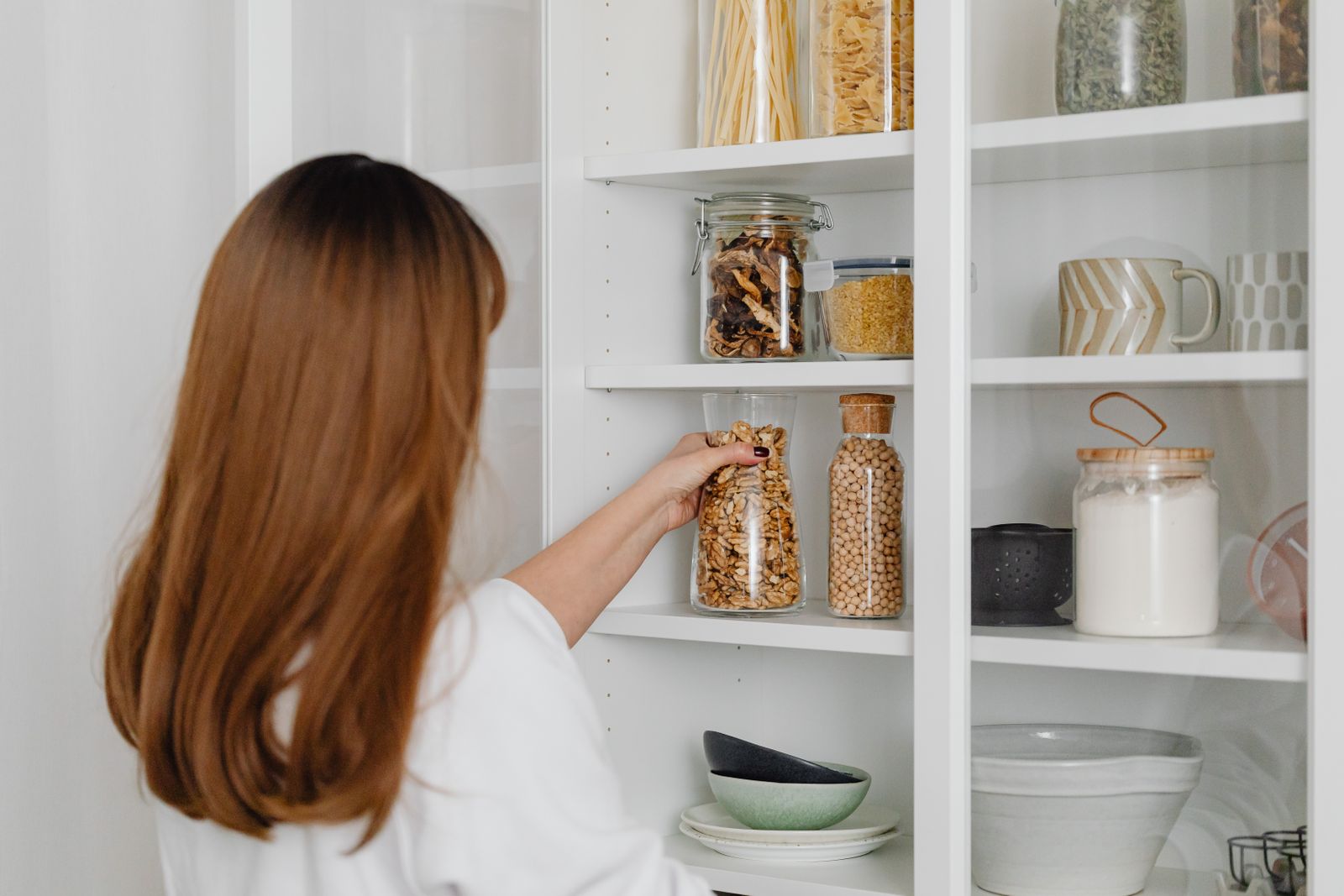
For dry goods, repurpose into clear, square, airtight containers. The Container Store sells a 10-piece set of "Lock & Lock" or "Sistema" clear containers for $39 to $59. Square containers stack efficiently on pantry shelves and let you see the level at a glance. Labels (Brother P-touch, $29 label maker, plus $12 tape) finish the job.
A pull-out pantry (15-inch-wide Rev-A-Shelf 5PSP series) fits next to a range and converts a 24-inch filler into a five-shelf slim storage unit for spices, oils, and baking supplies. Installation is the same as a base pull-out.
If you do not have pantry space at all, a freestanding pantry cabinet like the IKEA HEMNES (71 inches tall, $179) or the South Shore axess bookcase-style pantry ($239) goes against any wall and adds 4 to 6 cubic feet of storage for $200 or less.
Vertical Storage and Cabinet Sides
Vertical storage recovers one of the most underused surfaces in any kitchen: the side of a cabinet, the side of the fridge, or the sliver of wall between cabinets and the ceiling.
For cabinet sides, a magnetic knife strip (Becker, $32 to $48) holds knives, scissors, and small kitchen shears without taking a drawer slot. For the side of the fridge, a Joseph Joseph cling-wrap dispenser ($24) and a wall-mounted paper towel holder ($14) keep rolls and bags in one place.
Between cabinets and ceiling, install a 6- to 10-inch floating shelf (IKEA MOSJÖ, $14, or West Elm Terrace, $79) and store serving pieces, cookbooks, or overflow glassware. Floating shelves are forgiving to install - two anchors in studs hold up to 30 pounds.
Under-Sink and the Hardest Cabinet in the House
Under the sink is plumbing, not storage. The P-trap, supply lines, and garbage disposal eat 30 to 40 percent of the otherwise usable volume. Treating under-sink as anything other than a dedicated plumbing drawer is what leads to a leaning tower of cleaning spray bottles.
The straightforward fix is a two-tier sliding under-sink tray. SimpleHouseware's pull-out plastic tray runs $32 to $48 and fits a standard 30-inch base cabinet. mDesign's two-tier organizer with a sliding drawer ($34) gives a tier for tall bottles and a tier for sponges and brushes. Both are waterproof and wipe clean.
A few extras to add:
- A small tension rod ($6, IKEA or Container Store) across the inside of the cabinet door for hanging spray bottles.
- A caddy for dishwasher pods and brushes ($12, mDesign).
- A labeled bin for trash bags and recycling bags ($14, SimpleHouseware).
Total under-sink kit: under $100, and the cabinet is functional again.
Corner Cabinet Solutions That Work
Corner cabinets are the graveyard of a kitchen: a single Tupperware lid, a hand blender no one uses, and a vague sense of dread. Three solutions actually fix this.
Lazy Susan. As mentioned earlier, a 32-inch two-tier polymer lazy susan ($134 to $189) opens up 70 percent of the back corner by turning it into a rotating shelf.
Pull-out corner unit. Rev-A-Shelf's 4-tier blind corner pull-out (5CW series, $429 to $599) is the closest you can get to a full-extension drawer in a corner. It works in cabinets where the door is hinged next to the corner rather than at the corner.
Magic Corner. For full-overlay cabinets, a Hettich or Kessebohmer Magic Corner ($799 to $1,499 installed) pulls the entire cabinet contents toward the door. It is the most expensive option but it is also the most usable.
For a $50 budget, the lazy susan wins every time. For a $500 to $800 renovation budget, the pull-out corner unit is worth it.
Counter Space, Spices, and the Edits
The point of organization is not drawers that look good on Instagram. It is a kitchen where you can find everything, cook dinner, and clean up in under 45 minutes. That requires ruthless editing at the start.
Count what is on your counter right now. Most kitchens carry 8 to 15 items that should be stored. Coffee maker, toaster, knife block, fruit bowl - one or two are fine. The full set is too many.
Same for spices. If you have more than 25 jars, donate the duplicates and store the rest alphabetically in a 16- to 32-jar pull-out. A mDesign 16-jar spice organizer ($32 to $48) slides into a 12-inch base cabinet and brings every jar to eye level.
The last edit is a maintenance habit. Once a quarter, pull every drawer and bin, return the runaways to their zone, and bin what is broken or unused. Twenty minutes, four times a year, keeps the kitchen from drifting back to chaos.
The bottom line
Zone the kitchen by task, store by frequency, and pick organizers that match the room instead of fighting it. A $200 to $400 kit of SimpleHouseware, mDesign, Rev-A-Shelf, and Joseph Joseph inserts will outperform any $5,000 cabinet reface.