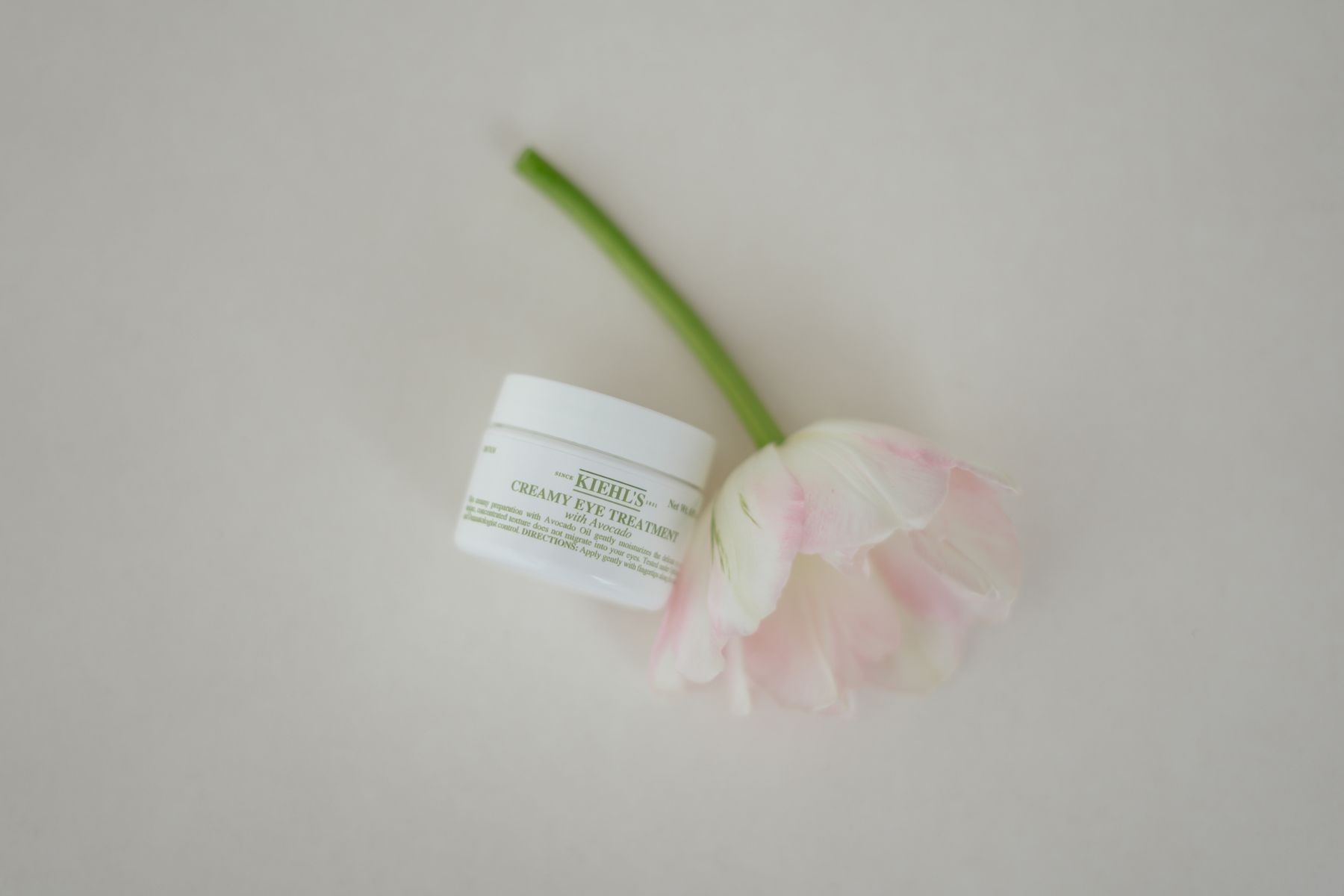
Eye cream is the most-debated category in skincare. Dermatologists will tell you, with some caveats, that a good face moisturizer works fine around the eyes. Beauty brands will tell you the skin around your eyes is uniquely fragile and demands a $95 specialized cream. Both are partly right.
The skin around the eyes is thinner (about 0.5 mm versus 2 mm on the cheek), has fewer oil glands, and shows signs of fatigue and aging faster. This much is true. What is also true: the same active ingredients — retinoids, vitamin C, peptides, ceramides — work identically in this area as on the rest of the face. The molecules do not care where they are applied. What changes is the formulation: lighter textures, lower active percentages, less irritating preservatives.
So the real question is not whether you need an eye cream. It is whether your regular moisturizer works around your eyes, or whether the eye area has specific concerns your moisturizer is not addressing.
Who actually needs a separate eye product
There are three cases where a dedicated eye product earns its place.
Case one: the regular moisturizer stings or migrates into the eyes. Eye-area skin is more sensitive to active ingredients and tolerates fewer formulations. If your regular moisturizer contains fragrance, retinol at higher than 0.1%, or strong exfoliating acids, it can cause irritation around the eyes even when the rest of the face tolerates it. A separate, gentler eye product lets you keep your face routine intact.
Case two: specific concerns. Dark circles from melanin or vascular issues, persistent puffiness from fluid retention, or visible fine lines that the regular moisturizer is not addressing. These are problems with targeted ingredients — vitamin C for pigmentation, caffeine for puffiness, peptides for firmness — that may justify a separate product.
Case three: layered treatment. Many dermatologists recommend using a regular face moisturizer around the eyes for basic hydration, then adding a treatment product on top for specific concerns. This is the "use both" approach, not "use one or the other."
For everyone else — those without specific concerns and whose face moisturizer feels comfortable around the eyes — the separate eye product is a marketing-driven expense. The $30 to $60 saved per year is better spent on sunscreen, which has more impact on eye-area aging than any cream.
Ingredients that work around the eyes
The actives that show clinical evidence for the eye area, ranked roughly by strength of evidence:
Retinol (0.025% to 0.05%): the strongest over-the-counter option for fine lines and crepiness. Lower concentrations are needed around the eyes because the skin is thinner. The $40 RoC Multi Correxion Eye Cream uses 0.1% retinol in a time-release base. The Ordinary has no eye-specific retinol product, but their 0.2% retinol in squalane works around the eyes if applied sparingly.
Vitamin C (5% to 10% L-ascorbic acid): reduces melanin production that causes dark circles and supports collagen. The $42 The Ordinary Ascorbic Acid 8% + Alpha Arbutin works around the eyes if tolerated, but L-ascorbic acid can sting. The gentler derivative, magnesium ascorbyl phosphate (MAP), is more stable and less irritating — the $32 Mad Hippie Vitamin C Serum uses MAP at 10%.
Peptides: copper peptides, palmitoyl pentapeptide, and matrixyl 3000 show measurable improvement in firmness in clinical trials. The $90 Drunk Elephant Shaba Complex Eye Serum uses a peptide blend with caffeine and antioxidants.
Caffeine (1% to 5%): the only ingredient with measurable short-term impact on puffiness. Caffeine constricts blood vessels and reduces fluid retention. The Inkey List Caffeine Eye Cream ($10) at 5% caffeine is a strong budget pick. The $55 Versed Press Restart uses caffeine with a cooling metal applicator for additional de-puffing.
Hyaluronic acid: hydrates and plumps. The $28 CeraVe Eye Repair Cream uses hyaluronic acid with ceramides, niacinamide, and a lightweight texture that works under makeup.
Niacinamide (2% to 10%): reduces pigmentation and supports barrier. The $14 The Ordinary Niacinamide 10% + Zinc 1% can be used around the eyes, though the texture is thinner than a cream.
Ceramides: barrier support. Especially important around the eyes because the skin here is more vulnerable to environmental damage. The CeraVe Eye Repair Cream and the $42 La Roche-Posay Pigmentclar Eye Cream both include ceramides.
Ingredients that do not work, despite marketing: most "anti-aging" eye creams contain peptides and antioxidants in low concentrations, which give a short-term hydrated look but no measurable change. The same applies to expensive eye creams that lead with botanical extracts — these are typically 90% water, 5% emollient, 5% fragrance, with less than 1% of the active ingredient that actually shows in the marketing.
Ingredients to avoid around the eyes
A short list, because the eye area is more reactive than the rest of the face.
High-percentage exfoliating acids. Glycolic acid at 7% or higher can cause persistent irritation around the eyes. Salicylic acid at 2% is generally tolerated; glycolic above 7% is not.
Fragrance. Synthetic fragrance is the most common irritant in eye-area products. Pick fragrance-free formulations. The CeraVe, La Roche-Posay, and Bioderma eye products are all fragrance-free.
Essential oils. Tea tree, lavender, citrus oils — all common in "natural" eye creams — are irritants around the eyes. Avoid them.
Heavy occlusives. Petrolatum and mineral oil are safe but can migrate into the eyes and blur vision. Use lighter formulations around the eyes, save the heavy balms for the orbital bone and brow.
High-percentage retinol. Above 0.3% is too aggressive for most eye-area skin. The 0.5% and 1% over-the-counter retinols should not go around the eyes.
Application technique
Most people apply eye cream wrong, and the technique matters more than the product.
Use the ring finger. It applies the least pressure, around 200 grams less than the index finger, which matters because the skin around the eyes can stretch with repeated hard rubbing.
Apply a rice-grain amount total, split between both eyes. Most people use three to five times too much. A thick layer does not absorb better; it migrates into the eyes and causes puffiness the next morning.
Pat, do not rub. Use a light tapping motion to distribute the product across the orbital bone — the bone that surrounds the eye socket — starting at the inner corner and moving outward. The skin directly on the lid and under the eye gets product from this distribution.
Apply on the orbital bone, not the eyelid. The eyelid has more oil glands and tolerates less product. The orbital bone and the area just under the brow absorb the cream through diffusion.
Apply at night for treatment products, in the morning for hydration and SPF. Retinol and acids go in the PM routine. Hyaluronic acid and peptides work both AM and PM.
Store in the fridge if it contains caffeine or is for puffiness. Cold constricts blood vessels and reduces puffiness further. Most eye creams without active ingredients are fine at room temperature.
Wait sixty seconds before applying makeup. Eye cream that has not absorbed will cause concealer to slip and crease.
Smart picks at every price
The category is overpriced as a whole. These are the picks we tested consistently:
Under $15: The Inkey List Caffeine Eye Cream ($10) for puffiness. CeraVe Eye Repair Cream ($15) for hydration and barrier support.
$15 to $40: RoC Multi Correxion Eye Cream ($28) for retinol with ceramides. Versed Press Restart ($32) for caffeine with a metal applicator. Bioderma Sensibio Eye Contour ($26) for sensitive skin.
$40 to $70: Paula's Choice Clinical Discoloration Repair Serum ($56) for dark circles. La Roche-Posay Pigmentclar Eye Cream ($42) for pigmentation. Drunk Elephant Shaba Complex Eye Serum ($54) for peptides and antioxidants.
$70+: Dr. Dennis Gross Advanced Retinol + Ferulic Eye Cream ($95) for high-strength retinol. SkinMedica TNS Eye Repair ($105) for growth factors. These work, but the performance gap between them and a $40 RoC or Paula's Choice product is narrower than the price gap suggests.
For most people, the $15 CeraVe or $28 RoC covers the eye-area basics. Step up only when there is a specific concern a budget product is not addressing.
A note on depuffing tools and gadgets
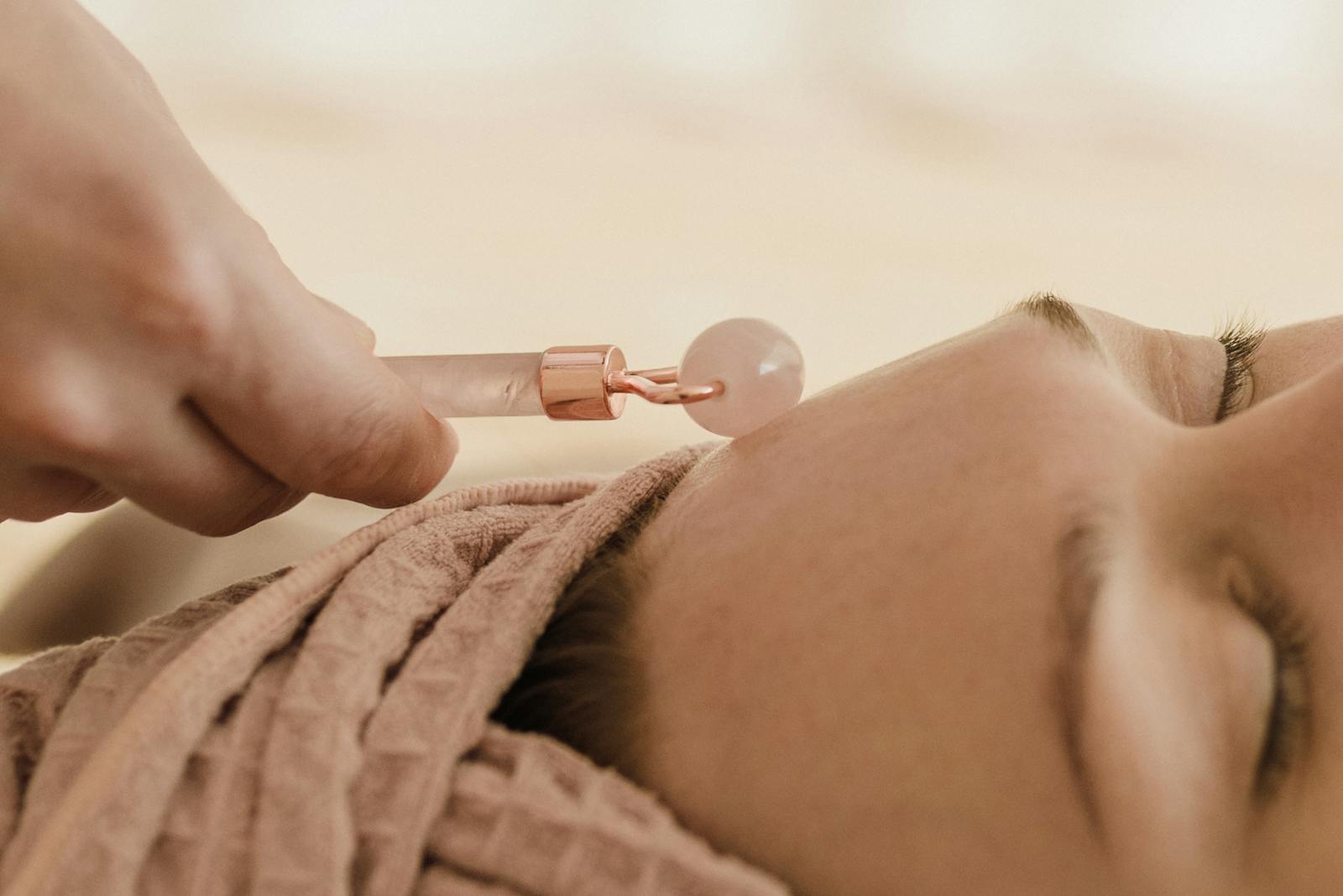
Jade rollers, gua sha, cooling eye masks, and microcurrent devices have a real but narrow effect. They de-puff through mechanical stimulation and cold. They do not change skin structure, do not reduce dark circles, and do not replace actives.
The $15 jade roller is fine if used consistently. The $400 NuFACE microcurrent device produces measurable short-term firmness changes when used five times a week, but the results require ongoing use to maintain. None of these are necessary. None are harmful. They are optional add-ons once the actives are in place.
The bottom line
You do not need a separate eye cream if your regular moisturizer is comfortable around your eyes and you have no specific concerns. If you do buy one, prioritize actives — caffeine for puffiness, retinol for lines, vitamin C or niacinamide for dark circles — and apply a rice-grain amount with a ring finger on the orbital bone. Spend $15 to $40 for most needs, and remember that sunscreen does more for eye-area aging than any cream in the jar.