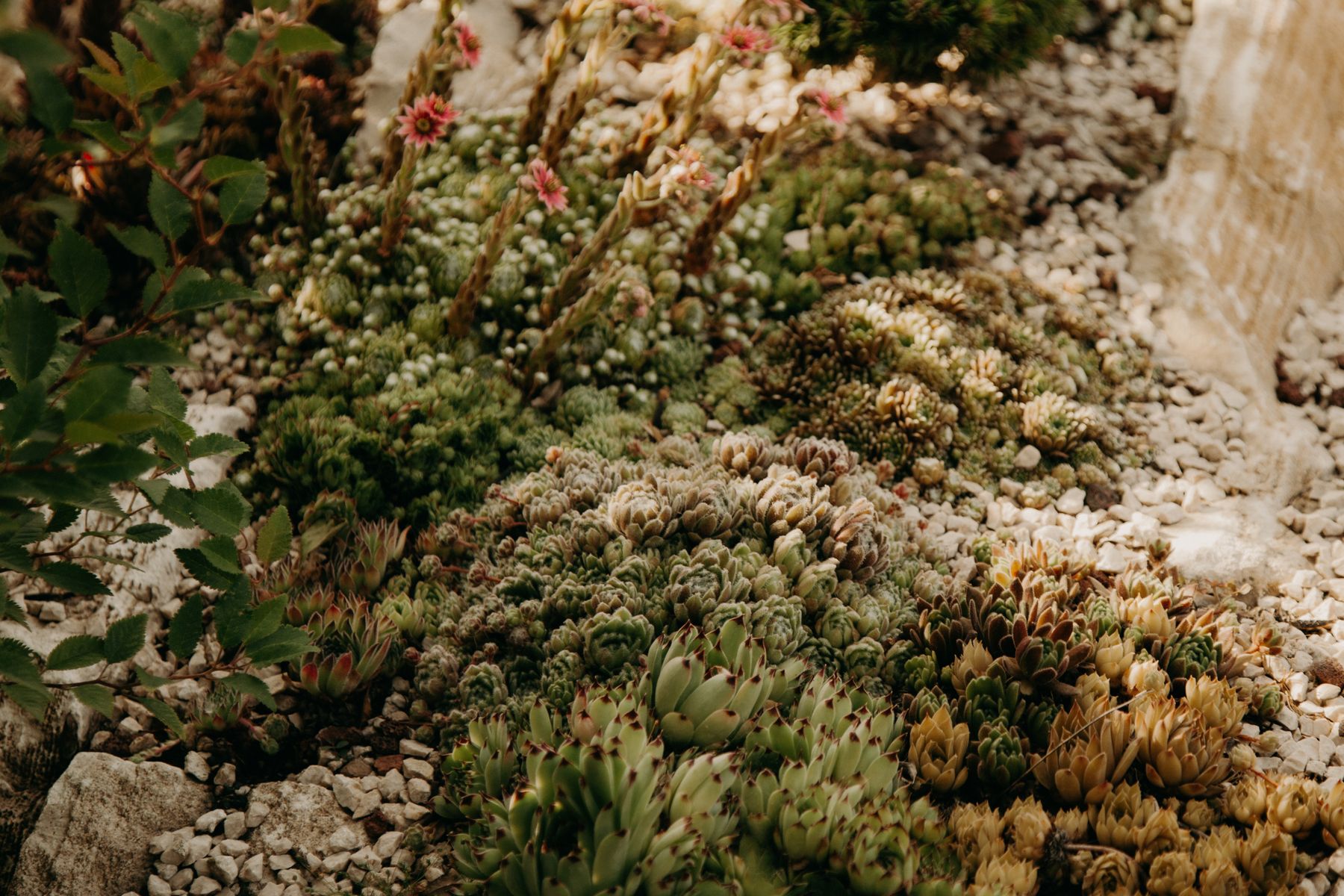
The terms xeriscape and drought-tolerant get used interchangeably, but they are not the same thing. Xeriscape is a design methodology — a set of seven principles developed by the Denver Water Department in the 1980s to reduce outdoor water use without sacrificing beauty. Drought-tolerant is the plant palette. When you combine the two, you get a yard that uses 50 to 75 percent less water than a conventional lawn, looks intentional year-round, and survives a dry summer without daily irrigation.
The seven xeriscape principles
The original seven principles still hold up after 40 years of practice. They are not rules so much as a checklist.
1. Plan and design. The biggest mistake is treating xeriscape as a plant substitution. You plant a lavender where a petunia was and call it done. Real xeriscape starts with a design that groups plants by water need (hydrozoning), places hardscape strategically, and accounts for slopes and drainage.
2. Improve the soil. Most residential soil is either heavy clay or sandy fill. Both resist water infiltration. Add 2 to 3 inches of compost and work it into the top 6 inches before planting. For new beds, an inch of expanded shale or decomposed granite worked into clay soil improves drainage dramatically. The $25 to $50 per yard you spend on amendment pays back in water savings within two seasons.
3. Limit turf grass. Lawns are the single largest outdoor water user in most American yards. A 1,000-square-foot lawn uses about 25,000 gallons of water per year in a hot climate. Replace unused turf with planting beds, hardscape, or a drought-tolerant lawn alternative like buffalo grass, UC Verde buffalo grass, or a Carex (sedge) lawn. UC Verde plugs cost $1 to $2 each and ship in trays of 50.
4. Choose appropriate plants. Select plants adapted to your region's rainfall, temperature, and soil. A plant that thrives in the Pacific Northwest may collapse in Phoenix. Match the plant to the microclimate.
5. Irrigate efficiently. Drip irrigation at the root zone, not overhead spray. Water deeply and infrequently to train roots downward.
6. Mulch. A 2 to 3 inch layer of organic mulch (cedar, pine, or shredded hardwood) or an inorganic mulch (decomposed granite, pea gravel, river rock) reduces evaporation by 70 percent and keeps soil temperatures stable.
7. Maintain appropriately. Xeriscape is not zero-maintenance. Pruning, weeding, and the occasional supplemental watering during establishment are still required. But the maintenance is qualitatively different from a lawn — a few hours per month versus several hours per week.
Plant selection by region
The right drought-tolerant plants for your yard depend on where you live. Below are regional palettes we have seen succeed.
Southwest (USDA zones 8 to 10, low desert): Agave, ocotillo, red yucca (Hesperaloe parviflora), desert spoon (Dasylirion wheeleri), sage varieties (Salvia greggii, Salvia chamaedryoides), Baja fairy duster (Calliandra californica), prickly pear cactus, foothill palo verde (for trees), and desert willow (Chilopsis linearis).
California and Mediterranean (zones 8 to 10): Lavender (Lavandula angustifolia 'Hidcote' or 'Munstead'), rosemary, sage, rockrose (Cistus), manzanita (Arctostaphylos), California lilac (Ceanothus), deer grass (Muhlenbergia rigens), and for trees — olive, Italian cypress, or strawberry tree (Arbutus 'Marina').
Texas and Southern Plains (zones 7 to 9): Texas sage (Leucophyllum frutescens), agave, yucca, red yucca, esperanza (Tecoma stans), Mexican feathergrass, salvia, autumn sage, and live oak or cedar elm as canopy trees.
Mountain West and High Desert (zones 5 to 7): Rabbitbrush (Chrysothamnus), apache plume (Fallugia paradoxa), penstemon varieties (Pineleaf, Palmer), sage, lavender, ornamental grasses like blue grama, and for trees — Gambel oak, piñon pine, or Rocky Mountain juniper.
Southeast and Mid-Atlantic (zones 7 to 9): The Southeast gets 40+ inches of rain annually, so drought tolerance here means surviving August dry spells rather than full desert conditions. Liriope, muhly grass (Muhlenbergia capillaris), vitex, crape myrtle, yucca, and sedum are good fits.
A $40 gallon-size lavender from a local nursery (vs. a $12 quart from a big box) establishes in half the time and saves you a season of supplemental watering. We tell homeowners to buy the largest size they can afford for their foundational plants and the smallest size for accent fillers.
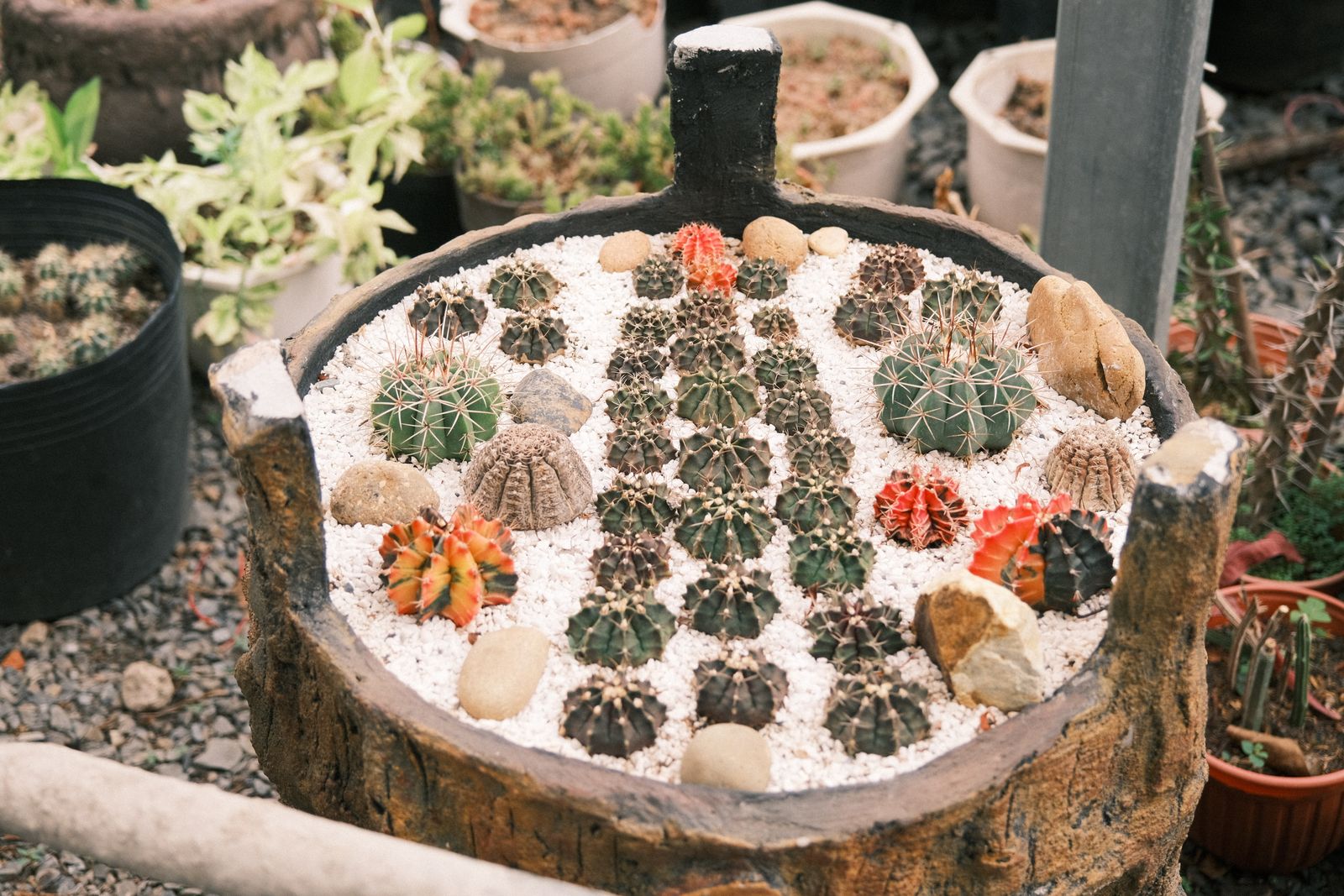
Plant palette staples worth knowing
Even if your region has its own palette, a few plants work almost everywhere in low-water gardens:
- Lavandula × intermedia 'Phenomenal' (lavender): USDA zones 5 to 9, 24 to 30 inches tall, purple midsummer flowers. Plant 3 feet apart in full sun. Prune lightly after bloom.
- Salvia greggii (autumn sage): zones 6 to 9, 18 to 24 inches tall, blooms from spring through fall in red, pink, or white. Pollinator magnet.
- Hesperaloe parviflora (red yucca): zones 5 to 10, 3 to 4 feet tall, coral-pink flowers on tall stalks from May through September. Tolerates reflected heat from south-facing walls.
- Agave parryi: zones 7 to 10, 18 to 24 inches tall and wide, blue-gray rosettes. Plant one and enjoy it for 15+ years before it flowers and dies.
- Muhlenbergia capillaris (pink muhly grass): zones 6 to 9, 2 to 3 feet tall, explodes into pink haze in October. The most photographed ornamental grass in low-water gardens.
- Rosmarinus officinalis 'Tuscan Blue' (rosemary): zones 8 to 11, 4 to 6 feet tall in mild climates. Doubles as a culinary herb.
- Sedum 'Autumn Joy': zones 3 to 9, 18 to 24 inches tall, succulent leaves and pink flowers that age to copper. Tolerates more water than the others, which is why it works in the Southeast.
These seven plants establish in a single season with biweekly deep watering and look mature by year three.
Hardscape as a design tool
In xeriscape, hardscape is not just a patio — it is a tool for reducing the total area that needs irrigation. The standard target is no more than 25 percent of the yard as lawn. The remaining 75 percent is a mix of planting beds, mulched areas, and hardscape.
Decomposed granite is the workhorse of the Southwest and Mediterranean xeriscape. It compacts into a stable, permeable surface that handles foot and light vehicular traffic. A 1-inch layer over a 100-square-foot patio costs $70 to $120 in material plus $50 to $100 for delivery. Stabilizer (a polymer binder like TechniSoil or G3) keeps the granite from tracking into shoes and shoes from tracking it indoors.
Flagstone and bluestone are the upscale choices. Random flagstone over a decomposed granite base runs $15 to $30 per square foot installed. Thermal bluestone (cut into consistent squares) runs $25 to $45 per square foot installed. Both handle freeze-thaw cycles when properly bedded.
Permeable pavers from manufacturers like Belgard, Pavestone, and Unilock let water drain between the joints instead of running off. A 200-square-foot permeable patio installed runs $1,800 to $3,500 and may qualify for a storm-water credit from your municipality. In Phoenix, Las Vegas, and parts of California, the credit can be $0.50 to $2.00 per square foot of impervious surface replaced.
Gravel and river rock look great in dry gardens but trap heat and make walking uncomfortable in summer. Use them as mulch in planting beds (a 2-inch layer over landscape fabric) rather than as a primary walking surface.
Irrigation that matches the plant
Sprinkler irrigation wastes 30 to 50 percent of applied water to evaporation and wind drift. Drip irrigation puts water where it belongs — at the root zone.
Drip components:
- 1/2-inch polyethylene mainline (the brown tubing): $0.40 to $0.70 per linear foot
- 1/4-inch drip line with 6-inch or 12-inch emitter spacing: $0.30 to $0.50 per linear foot
- Pressure-regulating filter ($20 to $40): required at the start of every drip system
- Battery-operated hose-end timer ($30 to $50): schedules watering when you forget
- Inline emitters (1 or 2 gallons per hour): $2 to $4 each, ideal for individual shrubs and trees
For a 200-square-foot planting bed, expect $80 to $150 in drip components. Watering twice a week at 30 minutes per cycle delivers about 0.5 inches per cycle — enough to wet the top 12 inches where most roots live.
Smart controllers upgrade the system. The Rachio 3 ($150) hooks to your Wi-Fi and adjusts watering based on local weather data, skipping cycles after rain. The Hydraw Wise ($200 to $300) is the commercial-grade option, more reliable for larger properties.
Established xeriscape plants need 30 to 50 percent of the water a conventional lawn needs. In a Mediterranean climate (zones 8 to 10), that works out to 7 to 10 inches of supplemental irrigation per year beyond rainfall.
Cost ranges and what to budget
For a 1,500-square-foot front yard converted from lawn to xeriscape, here is a realistic budget breakdown in 2026:
- Design and plan: $300 to $1,500 (DIY to landscape architect)
- Soil amendment (6 yards compost, 2 yards expanded shale): $400 to $600
- Hardscape (200 sq ft decomposed granite path, 80 sq ft flagstone landing): $1,200 to $2,500
- Drip irrigation system (4 zones, smart controller): $350 to $700
- Plants (40 to 60 in 1-gallon sizes, 8 to 12 in 5-gallon sizes): $1,000 to $2,500
- Mulch (3 to 4 yards): $200 to $400
- Labor (DIY to full install): $0 to $4,000
A DIY xeriscape install on a 1,500-square-foot yard costs $2,500 to $4,000 in materials and a weekend or two of your time. A contractor-installed version runs $6,000 to $12,000 in most markets. The water savings alone typically pay back the difference within 5 to 8 years, and you avoid the lawn-mowing hours altogether.
Common mistakes we see
Planting in summer. Establishment watering is hardest in July and August. Plant in fall (October to November in most regions) or early spring to take advantage of cool weather and seasonal rain.
Skipping the mulch. Bare soil evaporates water fast and grows weeds. The 2 to 3 inch layer is non-negotiable.
Grouping high-water and low-water plants together. A lavender next to a hydrangea means one of them gets the wrong amount of water. Hydrozoning — clustering plants by water need — solves this. High-water at the house foundation (where runoff collects), low-water at the edges and slopes.
Planting trees in lawn irrigation zones. Trees that get watered with the lawn develop shallow roots and fall over in storms. Put new trees on their own dedicated drip zone and water them deeply but rarely.
Choosing plants that look great in the nursery but not in your soil. Visit a botanical garden or a public xeriscape demonstration garden in your region before you commit. Most botanical gardens have a labeled drought-tolerant section. Denver Botanic Gardens, the Arizona-Sonora Desert Museum, the Los Angeles County Arboretum, and the San Antonio Botanical Garden are all worth the visit if you are within driving distance.
The bottom line
Xeriscape is a design framework that reduces outdoor water use by 50 to 75 percent through seven practical principles — and the result is a more interesting yard than the lawn it replaces. Start by drawing a hydrozoned plan, ripping out the unused lawn, and amending the soil in fall before you plant. Spend the largest portion of the plant budget on a few mature anchor plants (rosemary, agave, lavender, muhly grass) and let the rest of the bed fill in with smaller, cheaper starters. The water savings show up in the second summer; the design maturity shows up in year three.