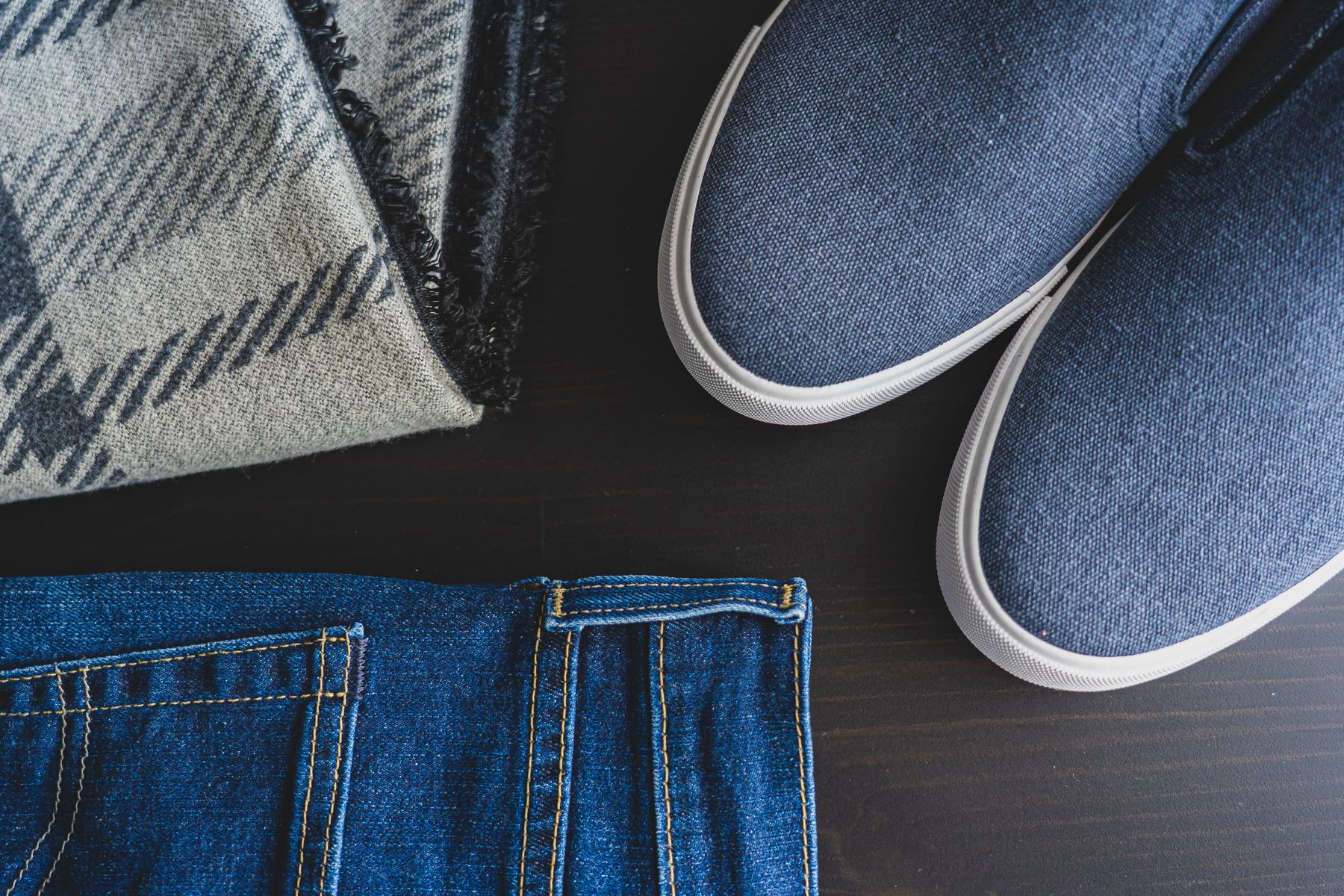
The single most common reason people dislike their body is that they have never worn jeans that actually fit them. We see it constantly. A woman who thinks she has thick thighs has been wearing mid-rise straight jeans that cut her in half. A man who thinks he is too skinny has been wearing relaxed-fit denim with five inches of fabric pooling at the ankle. The body is rarely the problem. The fit is.
This guide covers the four dimensions of jeans that actually determine fit — rise, leg shape, inseam, and fabric — plus a brand matrix that matches each body type to the right pair. The names are real: Levi's, AGOLDE, Everlane, Madewell, Frame. None of this is paid. These are the brands that keep coming up when we ask people which jeans they have worn the most over the past five years.
The four dimensions of fit
Rise is the distance from the crotch seam to the top of the waistband. It is the most important number on a pair of jeans and the one most people ignore.
- Low-rise: 7–8 inches. Sits below the navel. Y2K revival. Looks intentional only on very specific body types and styles. Most of us should skip.
- Mid-rise: 9–10 inches. Sits at or just below the navel. The most universally flattering rise. Works for most body types and most occasions. Levi's 501s, Madewell Perfect Vintage, AGOLDE 90s — all mid-rise by default.
- High-rise: 11–12 inches. Sits at the natural waist. Leg-lengthening, waist-defining. Excellent for short torsos and most proportions under 5'8". Aritzia, Frame Le High, AGOLDE High-Rise.
- Super high-rise: 13+ inches. Sits above the navel. Editorial look. Requires a tucked top to make sense. Harder to wear daily, easier to photograph.
The mistake: people who feel like every pair of jeans "cuts at the wrong spot" are almost always wearing the wrong rise for their torso length. Short torsos want high-rise. Long torsos want mid-rise. If you are constantly hiking up your jeans or feeling pinched at the waist, the rise is wrong.
Leg shape is the silhouette from the thigh down. This is where brands differentiate themselves.
- Skinny: tapered through thigh, narrow at ankle. Works on slim builds, harder on muscular thighs. Levi's 510, AGOLDE Mila.
- Straight: same width from thigh to ankle. The most classic, most forgiving cut. levi's 501, Everlane Way-High.
- Bootcut: slight flare from the knee. Designed for boots but reads as dated on most people in 2026.
- Wide-leg: dramatic A-line from the hip. High-waisted, usually with a long inseam. AGOLDE Chloe, Frame Le Palazzo.
- Boyfriend / Relaxed: oversized through hip and thigh, tapered at the ankle. Sit lower. Make a statement.
- Barrel: balloon-shaped, gathered at the ankle. Editorial. Harder to wear, easy to mis-size.
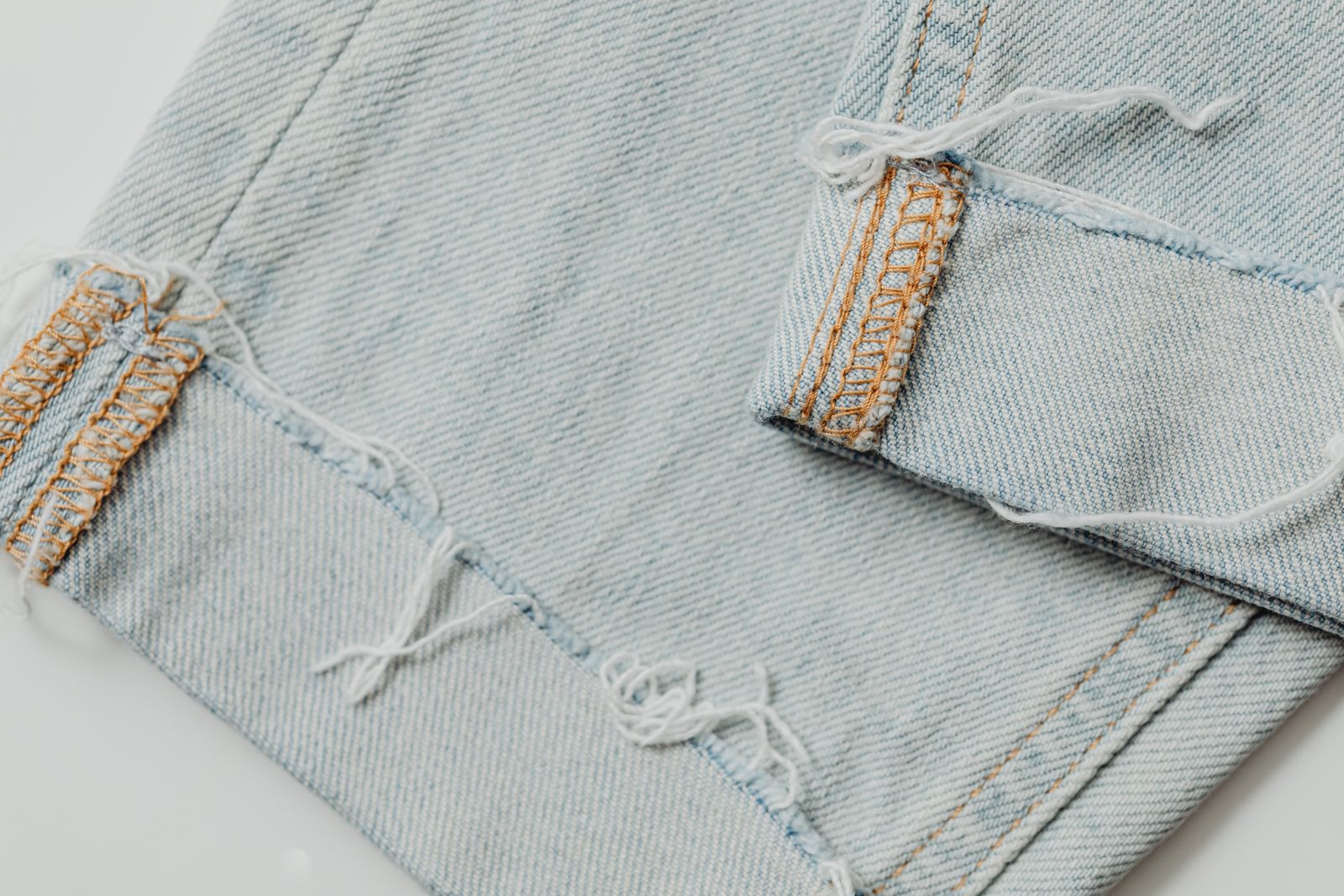
Inseam is the inside-leg seam length. Most women need 26–32 inches; most men need 28–34. Petite lines run 2–3 inches shorter. Tall lines run 2–4 inches longer. If you are cuffing more than two inches, the inseam is wrong, not your body.
Fabric composition is the silent fit variable. Stretch content changes everything.
- 100% cotton: rigid, structured, takes weeks to break in. Looks better over time (raw denim fades). Less forgiving of weight fluctuation. Levi's 501 Rigid.
- 98/2 cotton/elastane: classic stretch with a little give. Holds shape. The default for most "non-stretch" jeans that actually feel like real denim.
- 80/20 cotton/polyester or with stretch: mid-stretch. Comfortable but less shape-retentive.
- 50/50 cotton/lyocell or high-stretch: comfort-driven. Soft, drapey, but loses shape fastest. Everlane's Way-High in stretch.
The rule: the more stretch, the more forgiving the fit and the less longevity. Rigid denim lasts years; high-stretch denim looks tired in 18 months. If you care about lifespan, 100% cotton or low-stretch is the answer.
Raw vs selvedge vs washed
These terms are everywhere on premium denim and almost no one explains them.
Raw denim (also called "dry denim") is unwashed after dyeing. It is stiff, dark, and indigo-rich out of the box. It fades with wear — at the knees, the back pocket edges, the whisker lines at the thigh. The fades are personal because they are yours. Raw denim needs 30–60 wears before it starts to feel like your jeans.
Selvedge denim refers to the woven edge of the fabric — a clean, finished edge (usually with a colored stripe) that prevents fraying. Selvedge is woven on old shuttle looms and signals a slower, more deliberate manufacturing process. Most selvedge denim is also raw, but not all raw is selvedge. Selvedge is heavier, more durable, and more expensive.
Washed denim is pre-washed for softness and a worn-in look. The most common retail form. Easier to wear, faster to break in, less interesting to break in over time.
When raw and selvedge matter: when you care about denim as a long-term piece and want a personalized fade. When they do not matter: when you want comfort now and do not want to fuss. A $200 pair of APC New Standard raw selvedge will look better in five years than a $150 pair of washed Levi's 511 ever will, but only if you actually wear them.
Brand matrix by body type
This is the part you cannot get from a single brand's website. Every brand cuts slightly differently, and the right brand for your build is not necessarily the most popular one.
Petite (under 5'4"):
- Madewell Perfect Vintage in Petite ($148). High-rise, slim-straight. Cuts proportioned for short frames.
- AGOLDE 90s Mid Rise in 26" inseam ($188). The most flattering straight-leg on short legs we have seen.
- Everlane Way-High in 25/26" ($98). Affordable and well-cut. The budget pick.
Average height (5'4" to 5'8"):
- Levi's 501 Original ($98). The archetype. Mid-rise, straight. The inseam is generous, get them hemmed.
- AGOLDE High-Rise Mom ($188). The high-rise straight that fits most people most of the time.
- Madewell Curvy Perfect Vintage ($148). Slightly more room through the hip and thigh. Designed for curves.
Tall (5'8" to 5'10"):
- Frame Le High Raw Hem ($222). Long inseam, the raw hem lets you cut to length without finishing.
- Toteme Twin Stitch ($450). Premium denim, long inseam, refined cut. For when you want jeans that look like a fashion piece.
- AGOLDE Chloe High-Rise Wide ($208). Wide-leg that finally makes sense on taller frames.
Very tall (5'10"+):
- Frame Le Palazzo ($242). Long, dramatic wide-leg.
- Toteme Wide ($450). The most polished wide-leg in the market.
- Madewell Tall ($148). Their tall line runs 2–3 inches longer than standard.
Curvy hips, narrow waist:
- Madewell Curvy line ($148–$168). Designed for a 10"+ difference between waist and hip.
- Levi's Ribcage Straight Ankle ($98). Very high-rise straight. Holds the waist without a belt.
- AGOLDE Pinch Waist ($188). Pinched at the back waist to follow the curve. A cult favorite for a reason.
Athletic / muscular thighs:
- Levi's 559 Relaxed Straight ($78). Roomy through the thigh, straight down. The "real leg" jean.
- Frame Athletic fit ($222). Designed for muscular builds without billowing through the calf.
- AGOLDE Stovepipe ($208). Slightly tapered, roomy through the thigh. Modern fit for active legs.
Slim / straight builds:
- Levi's 511 Slim ($98). The skinny alternative without going full skinny.
- Aritzia Denim Forum ($148). Various cuts, well-fitted across slim builds.
- COS Wide-leg ($179). Modern, minimalist, generous through the leg.
What to spend
There is a real difference between $80 denim and $300 denim, and there is also real diminishing returns above $400.
- $70–$120: Levi's, Everlane, Old Navy. Honest denim, mostly mid-stretch, good entry points. Lasts 2–4 years of regular wear.
- $150–$250: Madewell, AGOLDE, Mother, Frame, Aritzia. The sweet spot. Better fabric, better construction, more interesting cuts. This is where you find your forever pair.
- $300–$500: Toteme, Acne Studios, Rag & Bone, Japanese brands. Selvedge often. Premium hardware. Lasts 5–10 years if cared for. Buy one pair, not five.
- $500+: Luxury denim from Khaite, Mother Denim's higher-end lines, designer denim. You are paying for label and limited runs. The construction is excellent but the gains over $300 are marginal.
The honest rule: spend $180–$220 on one great pair rather than $80 on three so-so ones. The $200 jean worn 200 days a year for four years beats three $80 pairs worn 200 days each.
Caring for denim so it lasts
The way you wash denim determines how long it looks new.
- Wash rarely: every 10–30 wears, not after every wear. Spot-clean between washes.
- Cold water, inside out: protects the dye and reduces friction wear.
- Skip the dryer: tumble drying is what destroys the elastane in stretch denim. Hang or lay flat.
- Freeze as an alternative: this does not actually clean anything — the freezer kills odor-causing bacteria for a few hours but does not remove body oils. It is fine between washes but is not a substitute.
- Repair, don't replace: a $25 tailor patch on the inner thigh doubles the life of the jean. Most dry cleaners do it.
The bottom line
Rise is the most important number. Leg shape determines silhouette. Inseam has to be right or the whole outfit looks off. Fabric composition determines comfort and lifespan. For most people in most wardrobes, a $180 mid-rise straight in 99% cotton from Madewell or AGOLDE is the right starting point. Fit your build, not the trend.